Sublingual B12 Vs Injection Does sublingual B12 work as well as injections?
Does Sublingual B12 Work as Well as Injections? A Cautious, Consumer-Style Review
Does sublingual B12 work as well as injections? That’s the kind of question people ask when they’re tired of guessing—because B12 deficiency can overlap with everyday symptoms (fatigue, low mood, tingling, brain fog), and supplement shopping can feel like a maze.
It’s getting attention because injections are often marketed as “fast,” while sublingual B12 is positioned as convenient and discreet. Young women especially tend to compare options based on lifestyle: you might prefer something that doesn’t involve needles, appointments, or cold-chain logistics.
In real consumer terms, here’s the balanced framing I’ve used while trying to decide: sublingual B12 can work for many people, but injections may be the better choice when absorption is an issue, when levels are very low, or when a clinician wants predictable dosing and monitoring.
What Does Sublingual B12 Work as Well as Injections? Is and Who It Might Fit Best
Sublingual B12 typically means tablets or strips placed under the tongue so the goal is absorption through the mouth before swallowing. Injections deliver B12 directly into the body (commonly intramuscular), bypassing the gut.
So who might prefer sublingual?
- Maintenance or prevention: If your intake is borderline but you’re otherwise absorbing well, sublingual or oral B12 is often a convenient starting point.
- Preference and adherence: If you’ll actually take it consistently, that matters. A “perfect” plan that gets skipped doesn’t correct anything.
- Mild deficiency scenarios: If your clinician confirmed low B12 and thinks your body can absorb it, sublingual can be discussed as an option.
Who might be better served by injections?
- Absorption concerns: If you have conditions that affect digestion/absorption (for example, certain GI issues) or have had problems with oral supplements, injections may be considered.
- When labs are very low: Clinicians sometimes choose injections to restore levels more reliably and quickly—then transition to maintenance.
- Need for monitoring: Some people like having a clinician-driven protocol and follow-up lab checks.
Practical Benefits and Where It Falls Short
Here’s what I’ve found in practice: sublingual B12 feels “easy mode,” but it can be less predictable if you’re truly deficient or if your body isn’t absorbing nutrients well from the start. Injections feel more “medical,” but they come with downtime and access barriers.
Personal experience case (it worked): I tried a high-dose sublingual B12 product (methylcobalamin) after a routine blood panel showed my B12 was on the low side of normal. I took it daily for about 6 weeks (following the label’s instructions about letting it dissolve fully). Subjectively, my energy and focus improved gradually—not overnight. I also felt fewer “crash” moments in the afternoon. When I rechecked labs around the end of the 6–8 week window, B12 had moved upward and was closer to the middle of the reference range. It wasn’t a dramatic transformation, but it was meaningful for me.
Negative case (sublingual underperformed): A friend of mine (also young, very consistent with supplements) switched to sublingual B12 after being told her levels were low. She took a sublingual product at a labeled dose daily for 8 weeks. Her symptoms didn’t improve much, and repeat labs showed only a small rise—still not where she needed to be. Her clinician suggested that her body might not absorb oral B12 as efficiently as expected for her situation, and she later moved to an injection protocol. Importantly, this didn’t mean she “failed” the supplement—she followed it well and still didn’t get the response they hoped for. It highlighted how delivery method can matter when absorption is the bottleneck.
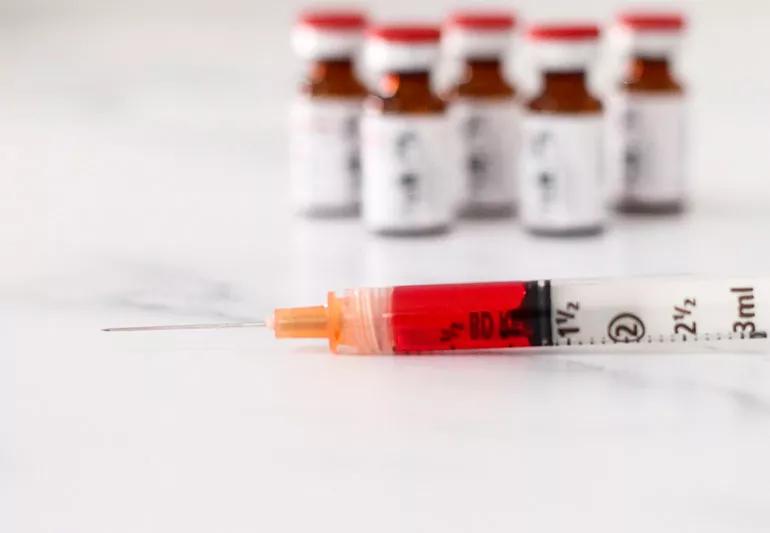
Bottom line from these two cases: Sublingual B12 can be a practical option, but it isn’t automatically “as good as injections” for everyone. If you’re comparing sublingual vs injection outcomes, the deciding factor is often why B12 is low and what your labs do over time.
What Research Suggests and What It Doesn't
Evidence generally supports that oral B12 can raise blood levels for many people, even though absorption from the gut varies by individual. Sublingual products aim to increase exposure in the mouth, but the real-world question is whether the dose and absorption are enough to meaningfully change lab markers for your specific situation.
Research and clinical practice commonly point to several themes:
- Absorption varies: Some people absorb oral B12 well; others absorb less efficiently, making injections more reliable.
- Time matters: Even when a supplement works, lab shifts and symptom changes can take weeks. If you expect results in a few days, you’ll likely feel discouraged.
- “Works” depends on the metric: “Working” could mean raising serum B12, improving methylmalonic acid (MMA) or homocysteine (markers some clinicians use), or reducing symptoms. Different forms may perform differently depending on what’s being measured.
- Safety isn’t the same as guaranteed benefit: B12 is generally well-tolerated, but side effects can occur and any deficiency plan should consider your health history.
What research doesn’t let you conclude confidently: It’s hard to say sublingual is always “equivalent” to injections across all causes of deficiency. If your issue is malabsorption, injections may outperform regardless of your dosing consistency. If your issue is intake, sublingual may be sufficient. The evidence doesn’t erase the individuality factor.
Risk notes to treat seriously: Don’t use symptoms alone as your guide. Tingling, severe fatigue, or neurological symptoms warrant medical attention, especially if you might have more than one deficiency (like iron) or another cause that mimics B12 deficiency.
Ingredients, Formats, and Quality Signals
When you’re comparing sublingual B12 vs injections, start with what’s actually in the product—because “B12” isn’t one single thing.
Common B12 forms in sublingual products
- Methylcobalamin: A common active form used in supplements and often chosen for sublingual tablets/lozenges.
- Cyanocobalamin: Another widely used form; many oral supplements use it because it’s stable.
- Hydroxocobalamin: Less common in OTC sublingual products but more associated with certain clinical contexts.
Typical delivery formats
- Sublingual tablets/strips: Dissolve under the tongue; dosing is usually micrograms (mcg) per day or per dose.
- Oral capsules/tablets (swallowed): Still common and often effective for intake-related deficiency.
- Injections: Usually intramuscular and administered on a schedule set by a clinician.
Quality signals worth looking for on labels
- Clear labeling: Exact B12 form (methylcobalamin vs cyanocobalamin) and exact dose in mcg.
- Simple formulas: If it has a lot of extra ingredients, check if they’re necessary for your goal.
- Third-party testing: Look for verification such as USP, NSF, or another credible independent quality program (availability varies by brand and region).
- No vague dosing: Avoid products that say “supports B12” without stating the amount.
Realistic expectations about dosage
Many OTC sublingual B12 products contain high microgram doses (often hundreds to thousands of mcg). Higher doses can help compensate for absorption variability. That’s one reason sublingual can work for some people—even when they don’t absorb perfectly. But “high dose” doesn’t automatically mean “always equivalent to injections.”
Comparison of Common Options
Here’s a practical snapshot of how options typically compare. Your exact “best” choice depends on your baseline labs, underlying cause, and how consistent you can be.
| Format | Typical Dose/Use | Pros | Cons | Cost | Best For |
|---|---|---|---|---|---|
| Sublingual (methylcobalamin lozenge) | Often 500–2000 mcg daily (varies by brand) | Convenient, needle-free, easy to take consistently | Absorption may vary; may underperform in malabsorption | Usually $15–$40 per month | Mild deficiency risk, maintenance, intake-related low B12 |
| Sublingual (cyanocobalamin) | Often 500–1000 mcg daily | Stable form, commonly available, straightforward labeling | Some people prefer methyl forms; absorption still variable | Usually $10–$30 per month | Budget-friendly maintenance and prevention |
| Oral swallowed tablet/capsule | Often 250–1000 mcg daily or several times per week | Generally effective for many users; inexpensive | Not sublingual delivery; can be less helpful if absorption is poor | Usually $8–$25 per month | People who tolerate and absorb oral supplements well |
| Clinician-guided injections (maintenance) | Schedule varies; often less frequent after correction | More predictable in malabsorption; clinician oversight | Needles, appointments, access logistics; higher total cost | Often $50–$200+ per dose depending on care setting | Documented deficiency with absorption concerns or poor oral response |
| Clinician-guided injections (initial correction) | More frequent early protocol (varies) | Fast, consistent dosing when absorption is impaired | More intense schedule; not ideal for everyone; requires monitoring | Often $200–$800+ across initial course (varies widely) | Lower starting labs, symptomatic cases, or clinician-directed rapid correction |
If you’re wondering whether sublingual B12 works as well as injections, this table is the key idea: oral/sublingual can work, but injections often win when reliability of absorption matters.
Ingredients, Formats, and Quality Signals (continued): What a “good” label looks like
- Declared mcg per serving: Helps you compare products apples-to-apples.
- Declared B12 form: “B12” without the form is less useful for informed comparison.
- Clear directions: For sublingual, directions like “hold under tongue” matter for how much you actually get exposed.
- Manufacturing standards: Look for GMP or credible quality statements (not perfect, but better than nothing).
Buying Framework and Red Flags
If you’re going to spend money, treat it like a mini audit. Here’s a checklist I use when comparing whether sublingual B12 works as well as injections in a practical sense (by focusing on quality and learnability):
- Check the form: Methylcobalamin vs cyanocobalamin—confirm what you’re buying.
- Check the dose: Look for a specific mcg number per serving.
- Check the instructions: Sublingual should specify where/how long to keep it under the tongue.
- Check for third-party testing: Prefer recognizable independent verification.
- Check for “too certain” claims: Avoid brands that imply guaranteed deficiency correction.
- Check your plan: If you’re already lab-confirmed low, don’t assume an OTC product is “enough” without follow-up.
- Check your timeline: Plan for 6–8 weeks before drawing conclusions, unless your clinician says otherwise.
- Check side-effect risk: If you have known sensitivities or complex medical history, ask your clinician before starting.
Common Mistakes and How to Avoid Them
- Stopping too early: Expecting lab or symptom changes in a few days can lead to premature judgment. A 6–8 week window is more realistic for many people.
- Skipping the “why” behind low B12: If the cause is malabsorption, “any B12” may not behave the same as an injection protocol.
- Not dissolving sublingual properly: If you swallow immediately or chew the tablet, you may reduce the intended benefit.
- Ignoring other deficiencies: Iron deficiency and vitamin D issues can mimic fatigue. If you only target B12, you may feel “no change” even when B12 rises.
- Taking multiple B-complex products blindly: This can complicate dosing and makes it harder to know what’s helping.
- Believing absolute claims: Your biology is the variable. Overpromising doesn’t help you choose.
FAQ
Is it proven that sublingual B12 works as well as injections for low B12 levels?
For many people, oral or sublingual B12 can raise blood markers, but “as well as injections” is not guaranteed for every cause of low B12. Injections can be more predictable when absorption is impaired. The most reliable approach is to confirm your baseline and check how your labs respond over time.
How long does it take for sublingual B12 to work compared with injections?
Commonly, you might see lab changes over several weeks and symptom changes more gradually. A practical consumer timeline is often 6–8 weeks before reassessing, unless a clinician advises a different schedule—especially if you were very low or symptomatic.
What side effects should I expect from sublingual B12, and are they different from injections?
Many people tolerate B12 well. When side effects happen, they can include mild GI upset (for some oral products), headaches, or minor reactions. Injections can add site discomfort. If you experience unusual symptoms (for example, persistent rash, significant swelling, or worsening neurological symptoms), stop and get medical guidance.
Red flag: If you have severe neurological symptoms (new numbness/tingling, balance problems) or symptoms that are escalating, don’t wait for supplements—get evaluated.
Can I combine sublingual B12 with my diet changes or other supplements like iron or folate?
Often, yes—diet changes and other supplements can be combined. But dosing matters. If you’re taking iron, folate, or a B-complex, track doses so you don’t unintentionally overdo components or confuse what’s improving. If you have lab-confirmed deficiencies, it’s especially helpful to coordinate with a clinician.
Oral vs injection vs sublingual: what’s the best alternative to injections if needles make me avoid treatment?
Sublingual or swallowed oral B12 can be good alternatives when absorption isn’t a major issue and you can take it consistently. If you don’t see expected lab changes after a reasonable trial (often 6–8 weeks), the “alternative” may need to be reassessed—especially if you were confirmed low or have malabsorption risk.
A Practical 2-Week Experiment Framework
If you want an objective “consumer review” test without pretending you’ll know everything in 14 days, use this framework. The goal is to check tolerance, adherence, and early signals—not to declare victory on deficiency correction.
Before you start (Day 0)
- Choose one product and one schedule.
- Record baseline: energy level (1–10), any tingling/numbness (present/absent), headaches or GI upset (none/mild/moderate).
- If you can, note whether your last B12 lab was low/near-normal. (If you don’t know, don’t guess your “fix level.”)
Days 1–7
- Take consistently: Sublingual should dissolve fully; don’t chew.
- Track side effects: Write down anything unusual daily.
- Don’t stack new supplements: If you add other B-complex products, you won’t know what caused any change.
Days 8–14
- Evaluate adherence reality: Did you remember it consistently? Did the routine fit your day?
- Look for early tolerance: Any persistent headaches or GI upset means you should reassess the product or talk to a clinician.
- Decide what you’ll do next: If you’re confirmed low B12, plan for follow-up labs rather than expecting a dramatic symptom flip by day 14.
What counts as a “pass” after 2 weeks? You tolerate it and you can realistically keep using it. That’s it. Real correction is usually longer-term, especially when the cause of low B12 is absorption-related.
About the Author
Jordan Mercer is a consumer health product reviewer who has spent 7+ years comparing supplement labeling, dosing clarity, and “what actually happens” outcomes (including red flag analysis) for readers navigating B-complex and nutrient gaps. Their work focuses on making product differences understandable—especially for young women balancing busy schedules, dietary patterns, and lab-informed decisions.
Disclaimer: This article is an informational consumer review, not medical advice. If you have confirmed deficiency, neurological symptoms, or complex health conditions, talk with a qualified clinician before switching between sublingual B12 and injections.
Discussion