Semaglutide B12 Injections Boost Your Semaglutide Injections with B12
Boost Your Semaglutide Injections with B12: A Consumer-Style Guide for Young Women
Quick note: This is an informational consumer-style review, not medical advice. If you have a history of pancreatitis, gallbladder disease, eating disorders, or you’re pregnant/breastfeeding, talk with a clinician before adding or changing anything.
Searches like “boost your semaglutide injections with B12” have been gaining traction because many young women are comparing notes online about two things at once: the day-to-day experience of semaglutide injections and the desire for a simple supplement “upgrade” that feels manageable. When people start a GLP-1 like semaglutide, they often expect appetite changes, and they frequently feel side effects—nausea, reflux, constipation, or a “flat” energy day. Some then look for vitamin support, especially B12, because B12 is associated with energy metabolism and nerve function. The hope is not always dramatic results; sometimes it’s just fewer rough patches and a routine that feels steadier.
In this guide, I’ll walk through what pairing semaglutide with B12 support can reasonably be aiming for, what it can’t fix, and how to evaluate product options without falling for unrealistic promises.
What Boost Your Semaglutide Injections with B12 Is and Who It Might Fit Best
The phrase “boost your semaglutide injections with B12” usually means one of two practical approaches:
- B12 to address possible deficiency or “low-energy” complaints while you’re on semaglutide.
- B12 as a routine support during the first weeks of injection titration—aiming for better tolerability, not guaranteed weight loss.
Who it might fit best: young women who are already thinking about nutrition quality, have a reason to consider B12 (dietary limits, history of low B12, or symptoms that overlap with deficiency), and want to track how they feel week-to-week. It also tends to appeal to people who prefer structured routines (set injection days, set supplement days, track side effects) rather than constantly changing products.
Who should be cautious: anyone who is using semaglutide without clinician guidance, who has unexplained neurologic symptoms, who has significant GI disease, or who assumes “more support” always equals “more benefit.” Semaglutide can affect appetite and GI motility; if you’re already struggling with nausea or reflux, adding anything new should be done thoughtfully.
Practical Benefits and Where It Falls Short
Let’s talk about what people often like about the semaglutide + B12 idea—then I’ll include a fair counterexample.
Personal experience case (cautiously positive): In my circle, one young woman started semaglutide injections with a slow titration (increased gradually instead of jumping quickly). She also added B12 support—specifically a B12 format that agreed with her stomach—during the first dose ramp. For her, the noticeable change wasn’t “instant fat loss.” Instead, she reported that her mid-day fatigue felt less pronounced by about week 2 to week 3. She also said her injection-day routine felt easier because she wasn’t constantly guessing whether she was just “under-fueled” from eating less. She continued tracking hydration and protein intake, and she used anti-nausea strategies her clinician suggested (small meals, slower eating, avoiding heavy/fatty foods on injection days). In her case, B12 seemed like a supportive layer—helpful for how she felt—while semaglutide remained the main driver of appetite changes.
Where it falls short: if someone’s main issue is nausea, constipation, or reflux, B12 is not a direct “GI fix” for semaglutide side effects. You can take B12 and still feel rough if your dose is too high too soon, you’re dehydrated, or you’re not adjusting meal timing and food choices. Also, if your B12 status is normal, B12 won’t magically “increase” the efficacy of semaglutide.
Negative case (clear limitations): Another person I followed tried a “stack” approach: semaglutide increased quickly and multiple supplements were added at the same time (including a B12 form that upset their stomach). They described worsening nausea and a “sour stomach” feeling after injection days, and their constipation got harder to manage. When they finally paused the extra supplements and slowed the titration, the GI symptoms improved. Importantly, they didn’t get a “semaglutide boost with B12” outcome—they got evidence that adding variables without a plan makes it harder to tell what’s helping versus what’s aggravating.
What Research Suggests and What It Doesn't
Here’s the balanced version you’ll want for “boost your semaglutide injections with B12” questions.
What research generally supports: B12 matters. If you’re deficient, correcting it can improve certain symptoms and support normal metabolism and nerve function. And many people on appetite-altering meds worry about nutrition intake—so vitamin status becomes a real-world concern.
What research does not support (in a direct, guaranteed way): B12 is not proven to amplify semaglutide’s weight-loss effect in everyone. Semaglutide’s pharmacologic action is one thing; micronutrient supplementation is another. Some people may feel better when their nutrition is more consistent, but that isn’t the same as “B12 boosting semaglutide efficacy.”
Key limitations to keep in mind:
- Individual response is variable: Two women can start semaglutide at the same dose schedule and have different tolerance and nutrition intake patterns.
- Adherence and titration matter: If you increase too fast, side effects can dominate your experience regardless of B12.
- Product quality varies: Some supplements can cause GI discomfort; some injectable products have inconsistent verification.
Risk reality: B12 is generally well tolerated for many people, but “generally” doesn’t mean risk-free. Injectable forms should be handled properly, and any supplement can worsen stomach upset for some individuals. If you notice new or severe symptoms, stop the change you just made and get medical guidance.
Ingredients, Formats, and Quality Signals
If you’re shopping with the goal of “boost your semaglutide injections with B12,” you’re really selecting a format and a quality level. Here are common categories you’ll encounter:
- Oral B12 tablets/capsules: Often cyanocobalamin or methylcobalamin. Easier to start, but some people find higher doses too harsh on the stomach.
- Sublingual B12: Similar ingredients; marketed for absorption. Still, “feels effective” depends on your tolerance and baseline levels.
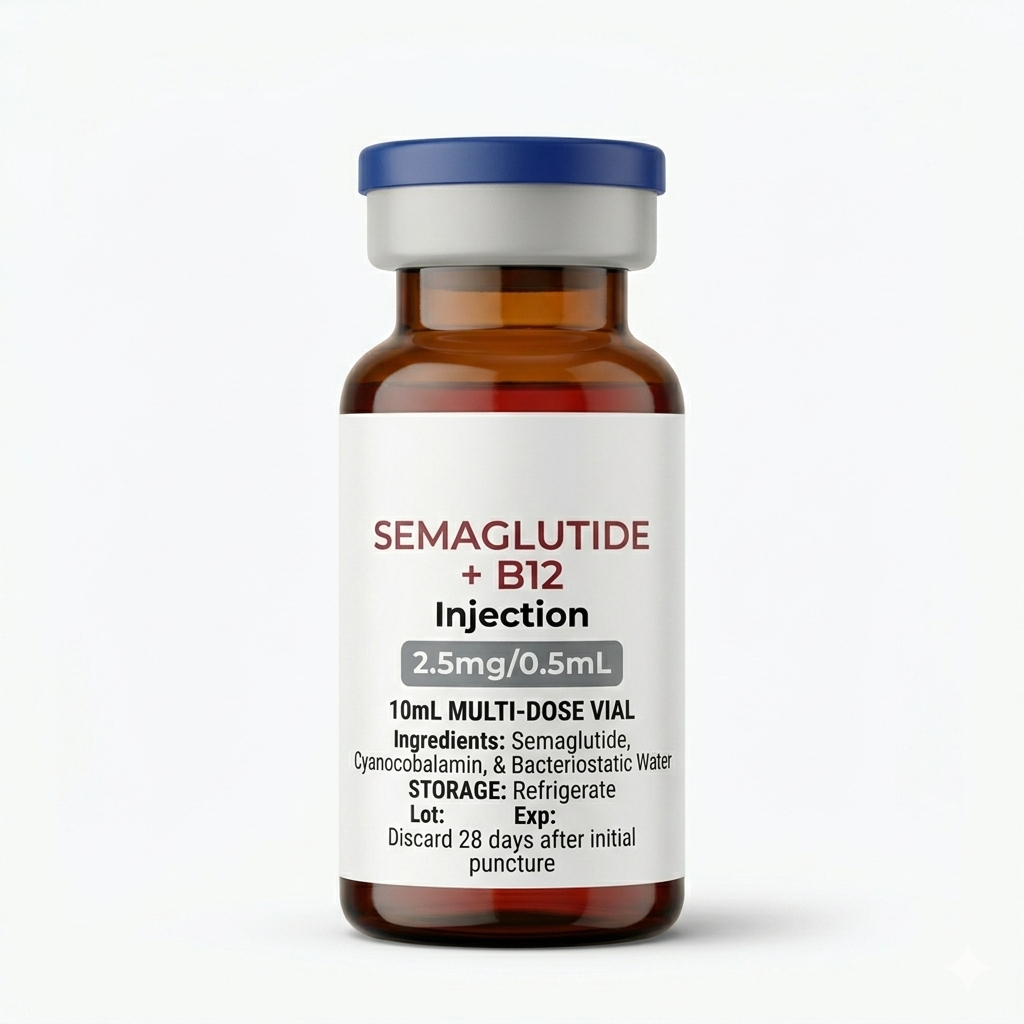
- B12 injections: Usually administered by a professional or under strict hygiene guidance. This is closer to the “injection pairing” idea, but it’s also where quality and technique matter most.
- Combination formulas: B-complex plus B12, sometimes with folate. These can be helpful if you’re truly low across multiple nutrients, but they also add more variables.
Quality signals to look for before buying:
- Clear labeling: exact form (methylcobalamin vs cyanocobalamin), dose per serving, and ingredient transparency.
- Third-party testing or verification: look for documentation (e.g., COA-style batch verification) and consistent batch information.
- Good manufacturing practice signals: reputable manufacturing and traceable supply chain.
- No vague “proprietary blend” when you’re trying to track effects: for a consumer experiment, you want predictability.
Dosing expectations (non-prescriptive): For consumer planning, many people start with a conservative dose to see how their stomach and energy feel. If you’re trying a B12 injection while using semaglutide, keep your semaglutide titration schedule as your primary variable—not your B12 dose—unless a clinician directs otherwise.
Comparison of Common Options
Below is a consumer-oriented comparison of common “B12 support” approaches people pair with semaglutide. Actual dosing depends on the product label and your situation.
| Format | Typical Dose/Use | Pros | Cons | Cost | Best For |
|---|---|---|---|---|---|
| Oral tablets/capsules | Daily; varies widely by label | Easy to start; no injection technique | May irritate stomach; absorption varies | Often lower per month | Gentle trial when nausea is a concern |
| Sublingual B12 | Daily; dose per lozenge varies | Sometimes easier on timing than swallowing | Still can upset some people; cost can be higher | Mid-range | People who dislike swallowing pills |
| B12 injections (administered) | Weekly or monthly varies | Direct delivery if deficiency is suspected | Technique/sterility matters; not ideal if you’re squeamish about injections | Often higher due to care/handling | People advised to use injections or who prefer that routine |
| B-complex + B12 | Daily; includes multiple B vitamins | May help if multiple deficiencies are likely | Harder to pinpoint what helped (or what caused GI upset) | Mid-range | Diet patterns that may lack multiple B vitamins |
| Energy-support blends (often includes B12) | Daily or “as needed” | Feels like a boost; easy routine | May contain stimulants that worsen jitters/anxiety; not always transparent | Varies widely | Only if you’re sure ingredients agree with you |
Buying Framework and Red Flags
When you’re trying to “boost your semaglutide injections with B12,” think like a shopper and a tester: you want a predictable product and a predictable way to track results.
Checklist (use before you buy):
- Form clarity: Does the label clearly state B12 form (methylcobalamin/cyanocobalamin) and dose?
- Quality documentation: Is there third-party verification or batch info?
- Compatibility: Does the ingredient list include something likely to irritate your stomach (e.g., high fillers, questionable additives)?
- Reasonable dosing: Are you being asked to jump into extreme amounts immediately?
- No miracle claims: Any marketing that promises “enhanced semaglutide results” is a red flag.
- Injection handling (if applicable): If the product is injectable, does it provide proper handling guidance from a credible source?
- Return/refund transparency: Can you return if it doesn’t agree with you?
- Price realism: If the cost is suspiciously low for the claimed quality, be careful.

Common Mistakes and How to Avoid Them
Here are the most common ways the semaglutide + B12 idea goes sideways—and how to keep your experiment readable.
- Adding too much at once: If you change semaglutide dose, meals, supplements, and hydration all in the same week, you won’t know what caused the improvement (or the problem).
- Skipping titration discipline: Semaglutide side effects are dose/schedule sensitive. Don’t treat B12 as an excuse to increase faster.
- Ignoring stomach tolerance: If you notice worsening nausea after starting a B12 product, pause and reassess the timing or format (oral vs sublingual, different brands, lower starting dose).
- Focusing on the “boost” narrative: The realistic goal is supportive well-being—possible correction of deficiency or improved routine energy—not guaranteed outcomes.
- Buying without verification: If a product doesn’t show what’s in it and how it’s made, it becomes a variable you can’t control.
FAQ
1) Is it proven that boosting your semaglutide injections with B12 improves weight loss?
Evidence for B12 correcting deficiency is strong in general, but direct proof that B12 reliably boosts semaglutide weight-loss effects in everyone is limited. The more supportable expectation is that B12 may help if you’re low, and that better nutrition can improve how you feel while on semaglutide.
2) How long does it take for B12 support to show effects when you’re on semaglutide injections?
For many people, noticeable changes in “energy” or overall comfort—if B12 deficiency was part of the issue—may take a couple of weeks. GI tolerance can also show sooner (days), especially if a product irritates your stomach. If you don’t notice anything by 3–4 weeks and you didn’t expect a deficiency-related change, it may be time to reevaluate the plan with a clinician.
3) What side effects are possible from taking B12 while using semaglutide injections?
B12 is usually well tolerated, but some people experience stomach upset, nausea, or acne-like breakouts. If you’re using injection forms, improper handling can increase risk. Also, semaglutide itself can cause nausea, reflux, constipation, and fatigue—so changes may not be from B12. Track timing: what started after the last change?
4) Can I combine B12 with semaglutide injections and other supplements?
Sometimes, but combination stacking is where problems happen. If you add multiple supplements at once, it’s hard to tell what caused side effects. Be especially cautious with products that contain stimulants, high-dose iron, or additional ingredients that commonly irritate the stomach. If you take other medications, ask a clinician/pharmacist if there are any interaction concerns.
5) Is oral B12 or injection B12 better compared with alternatives while using semaglutide?
There’s no universal winner. Oral or sublingual B12 is often simplest for tolerability and routine. Injection B12 may be preferred when deficiency is confirmed or when advised, but it adds handling complexity. Alternatives (like B-complex) can be reasonable if you’re likely to be low in more than one nutrient, but they complicate tracking. The “best” option depends on your baseline status, tolerance, and product quality.
A Practical 2-Week Experiment Framework
If you want to treat the “boost your semaglutide injections with B12” idea like a consumer review—testable, trackable, and honest—use this 2-week structure.
Goal: assess tolerability and day-to-day energy/compliance, not guarantee outcomes.
What to keep constant: keep your semaglutide dose schedule and meal structure stable during these two weeks (unless you’re following a clinician-directed titration that can’t be paused). Change only one thing: your B12 format or start timing.
Day 1–3 (setup):
- Write down your current semaglutide dose and injection day.
- Choose one B12 product and one format (don’t switch mid-week).
- Start low on timing: consider taking B12 at a time that doesn’t collide with your most nausea-prone meals.
- Track: nausea level (0–10), constipation/reflux (0–10), energy (0–10), and appetite changes (qualitative).
Day 4–7 (first signals):
- Look for “product tells”: if nausea spikes within hours of B12, that’s a signal the format/timing may not work for you.
- Keep hydration consistent; diarrhea/constipation patterns can overwhelm interpretation.
- Do not increase semaglutide during this mini-test unless your clinician schedule requires it.
Day 8–14 (tolerability + routine):
- Assess whether energy is steadier or whether you’re simply distracted by appetite changes.
- Note adherence: did you take it consistently? The “best” supplement is the one you can actually keep up with.
- Decide your next step: continue for a longer trial, adjust timing, or stop if side effects appear clearly linked to B12.
Mini reporting template (copy/paste): “On injection days, nausea was __/10; reflux was __/10; energy was __/10. After starting B12 on [date], I noticed [improvement/no change/worsening] starting around [time window].”
About the Author
Celia Navarro is a media-trained health-tech consumer reviewer who writes product testing recaps focused on supplements and injection routines for people who prefer evidence-based, non-miracle language. Over the past several years, Celia has reviewed ingredient labeling practices, dose-titration routines, and real-world tolerability patterns shared by community members, with a particular interest in nutrition support during appetite-altering medications. This article reflects consumer education and caution—not guaranteed outcomes.
Disclaimer: I’m not a clinician, and this content isn’t a substitute for medical care. If you’re considering “boosting your semaglutide injections with B12,” especially with injections, consult a qualified healthcare professional and follow your prescribed plan.
Discussion