Rx B12 Injections Can you get a prescription for B12 injections?
Can You Get a Prescription for B12 Injections? A Practical, Cautious Consumer Review (and Buying Guide)
The question “Can you get a prescription for B12 injections?” keeps showing up in searches from young women because B12 is tied to fatigue, energy, hair/skin concerns, and—more quietly—diet choices like vegetarian or vegan eating, plus absorption issues that don’t always show up until labs are run. It’s also a keyword that gets swept up by social content: some people swear they feel better quickly; others say it’s a waste of money. A cautious reality check helps: B12 injections are typically considered when a clinician suspects deficiency or malabsorption, and the “right” route depends on your underlying cause—not just how you feel on a given day.
In this article, I’ll treat this like a consumer review: what the prescription conversation looks like, how long it may take for noticeable changes, what side effects you should actually watch for, and what evidence supports (and doesn’t support) injections versus oral supplements. You’ll also get a practical buying framework—especially if you’re tempted by high-dose vials online.
What Can You Get a Prescription for B12 Injections Is and Who It Might Fit Best
In plain terms, “can you get a prescription for B12 injections?” means: will a medical provider authorize injectable cyanocobalamin or other B12 forms after reviewing your symptoms and (ideally) lab results. Many clinicians will not prescribe injections solely for convenience or aesthetics. They’re more likely to prescribe if you have confirmed low B12 on blood work, borderline values with symptoms, or a known absorption risk.
Who it might fit best:
- People with lab-confirmed deficiency or repeated borderline results—especially if symptoms include fatigue, numbness/tingling, glossitis, or anemia findings.
- Young women with absorption risk such as pernicious anemia suspicion, gastric issues, bariatric surgery history, or chronic digestive conditions.
- Those who tried oral B12 without adequate improvement (often after a clinician checks compliance, dose, and absorption).
Who should be extra careful:
- Anyone with unexplained neurological symptoms (tingling, weakness, balance changes). These deserve prompt medical evaluation rather than a self-run injection experiment.
- People assuming B12 injections are a “pick-me-up.” If your fatigue is from sleep, iron deficiency, thyroid issues, stress, or low calories, B12 may not be the lever you think it is.
- Anyone with unclear sourcing for injectable products. If you can’t trace manufacturer labeling and batch details, that’s a red flag.
Practical Benefits and Where It Falls Short
Let’s talk practical. The main potential benefit people hope for is improved energy and symptom relief after B12 levels rise. For some, that can happen relatively quickly—especially if fatigue was genuinely driven by deficiency. But injections are not a universal “fix,” and your experience can depend on whether B12 was the limiting factor in the first place.
Positive case (personal experience style): A friend in her mid-20s (young woman, vegetarian for several years) reported worsening fatigue and brain fog. She asked her clinician for labs rather than guessing. Her results showed low B12 and mild anemia markers. She received an injection schedule recommended by her provider (and documented dosing instructions). Over the next 10–14 days, she noticed improved focus during the day and fewer “wiped out” afternoons. By about 4–6 weeks, she felt closer to her baseline, and she stayed on an oral maintenance plan as advised. In her case, the biggest win wasn’t just the injection—it was the fact that the underlying cause was confirmed and monitored.
Negative case (failure case): Another young woman I know tried B12 injections after reading online claims about fast energy gains. Her labs were not clearly deficient, and she didn’t follow up after the initial trial. She used a high-dose approach for about two weeks, expecting noticeable change. Instead, she felt “same or slightly worse,” and she developed recurring injection-site soreness and a short-lived rash-like reaction after one dose. She also realized her fatigue coincided with poor sleep and low iron intake. She stopped, returned to her doctor, and found another cause. The failure here wasn’t “B12 never works”—it was the mismatch between symptoms and the suspected cause.
Where B12 injections often fall short in consumer terms:
- Time-to-effect varies. Some people notice changes in days; others need weeks, especially if anemia or neurologic symptoms are involved.
- Side effects exist. Even if B12 is generally tolerated, injections can irritate tissue or trigger reactions in sensitive users.
- They don’t address the real cause by themselves. If low B12 is secondary to a bigger issue (diet, absorption, medications), you may still feel unwell until that’s addressed.
What Research Suggests and What It Doesn't
Evidence for B12 treatment is strongest when deficiency is confirmed. In that scenario, clinicians can correct low B12 stores and reduce deficiency-related issues. However, the research does not universally support the marketing-style expectation that B12 injections rapidly boost energy in everyone, regardless of baseline levels.
What research generally supports:
- Correcting deficiency improves deficiency symptoms for many people—especially those with anemia or clear low B12.
- Route matters for absorption. If you have malabsorption, injections can bypass absorption problems (though oral high-dose strategies can also work for some).
What the evidence does not support (or supports with limits):
- Guaranteed quick energy for people who are not deficient. If you’re normal-to-borderline, “feels better in 48 hours” is not a reliable expectation.
- One-size dosing. Injection schedules differ based on severity, cause, and lab trends, so a random high-dose plan may be unnecessary or poorly timed.
- Safe self-treatment in every case. Risk isn’t just the B12 molecule; it’s also incorrect administration, contamination, delaying diagnosis, and interacting causes (like neurologic symptoms requiring evaluation).
- Cyanocobalamin (very common in injection vials)
- Methylcobalamin (also used in supplements; injectable availability varies)
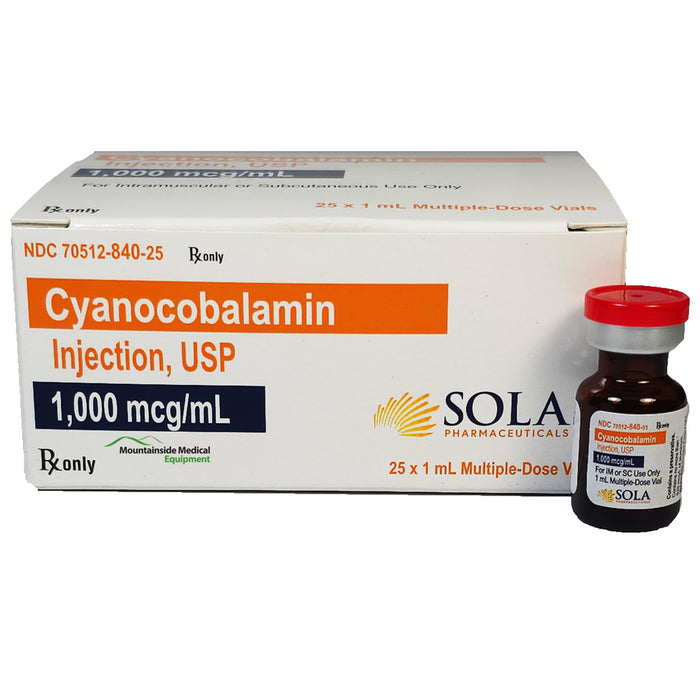
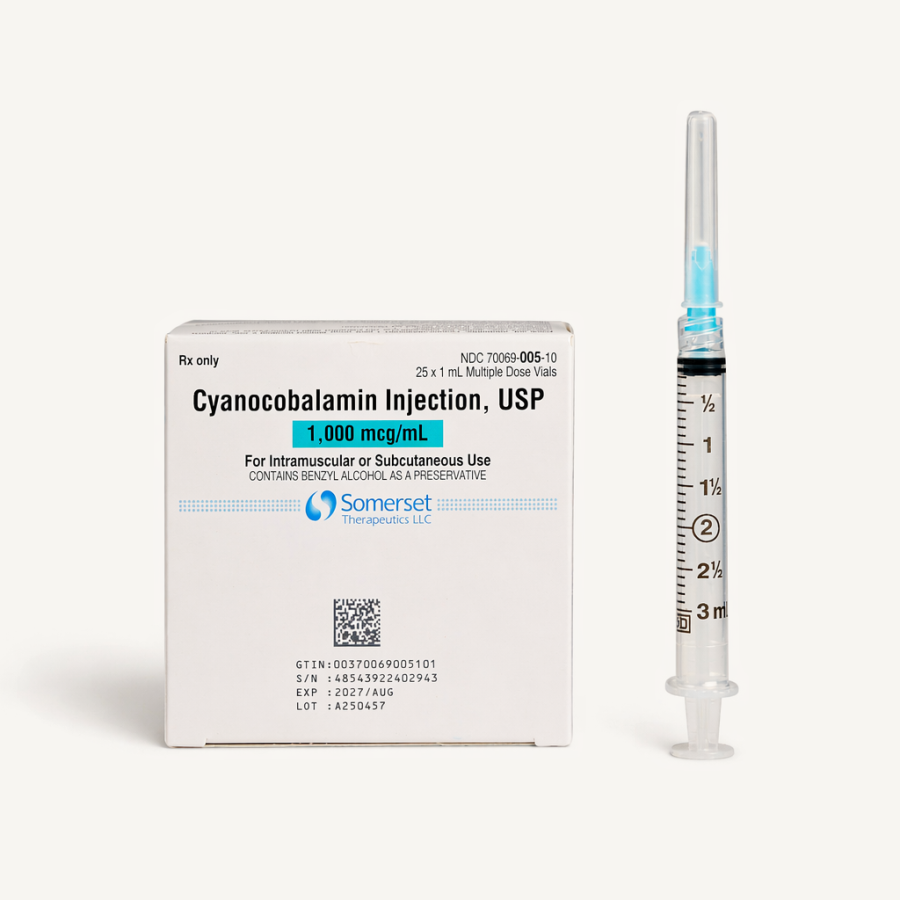
- Vials (often multi-dose or single-dose), labeled with strength such as 1,000 mcg or 2,000 mcg.
- Pre-filled syringes (less common depending on brand and region, but can reduce administration errors).
- Needle and syringe requirements (if you’re doing home administration, you need correct technique and supplies—ask a clinician or pharmacist for specific instructions).
- Clear labeling including B12 form, concentration (mcg per mL), volume, route guidance, and batch/lot information.
- Manufacturer and sourcing transparency (not just a generic listing).
- Pharmacy-grade presentation (consistent packaging, intact seals, and documentation you can reference).
- Storage instructions (and whether the product needs refrigeration).
- ✅ Clear prescription pathway: Ask your clinician about whether B12 injections are appropriate and which labs you should check (e.g., B12 level; sometimes MMA/homocysteine depending on clinician practice).
- ✅ Specific dose and schedule: Confirm the dose strength (mcg), frequency, route, and duration—no “take whatever” instructions.
- ✅ Evidence of correct formulation: Know whether the injection is cyanocobalamin or methylcobalamin.
- ✅ Storage and expiration: Confirm storage requirements and verify the expiration/lot information.
- ✅ Administration guidance: If doing home injections, get technique instructions from a medical professional.
- ✅ Quality sourcing: Avoid listings that don’t show clear product labeling and batch details.
- ✅ Safety red flags: If a seller implies guaranteed “energy cures,” that’s not objective; if dosing is vague, walk away.
- ✅ Check interactions: Tell your clinician about other supplements/medications, especially if you’re treating anemia or have neurological symptoms.
- Skipping labs and self-diagnosing deficiency. If your fatigue has a different cause, B12 injections may not help.
- Expecting immediate results every time. Track symptoms over days and weeks, not just one dose.
- Doubling down when there’s no change. If you feel worse or nothing improves after a reasonable trial, that’s a signal to pause and revisit the cause.
- Using the wrong dose strength for your plan. “1000 mcg” vs “2000 mcg” can matter when you’re not following a clinician schedule.
- Ignoring side effects. Injection-site pain is common; rash, hives, or worsening symptoms deserve medical advice.
- Combining with other supplements without checking totals. If you’re also taking multivitamins, consider whether you’re stacking B12 or other nutrients at high levels.
- Day 1: Baseline. Write down your energy (0–10), sleep hours, caffeine intake, and the top 3 symptoms you want to change (fatigue, brain fog, etc.).
- Days 2–3: Administration check. Confirm you took/administered exactly as directed (dose strength, timing, and technique if applicable).
- Days 4–7: Watch tolerability. Track injection-site pain, rash, headaches, stomach upset, or anything unusual. If side effects are significant, pause and contact a clinician.
- Days 8–10: Symptom trend. Look for a trend, not a single “good day.” If energy is unchanged and side effects are rising, that’s meaningful.
- Days 11–14: Reassess likely causes. If B12 injections haven’t helped, consider other labs or factors (iron, thyroid, sleep, calories) with your clinician.
Practical risk notes (consumer review tone): Even when a product is effective, injections can cause localized pain or reactions. And if you chase B12 first and ignore other likely causes—iron deficiency, thyroid problems, sleep deprivation—you may waste money and time.
Ingredients, Formats, and Quality Signals
When people search “can you get a prescription for B12 injections,” they often encounter common formats online. The main “ingredient” isn’t a cosmetic additive; it’s the B12 compound. Most injectable products fall into:
Product forms and typical consumer packaging:
Quality signals I look for as a cautious consumer:
Product direction (promotion, not hype): If you’re looking at a B12 injection product to discuss with a clinician, consider selecting from established suppliers that provide readable dosing strength (e.g., 1000 mcg or 2000 mcg vial strength) and clear product labeling. That’s more useful than buying the highest claim number.
Comparison of Common Options
Below is a practical comparison of what many people consider when they ask about B12 injections, plus the tradeoffs versus alternatives. “Cost” can vary by pharmacy, insurance, and dosing frequency—so treat these as ballpark categories, not quotes.
| Format | Typical Dose/Use | Pros | Cons | Cost | Best For |
|---|---|---|---|---|---|
| Prescription B12 injection (cyanocobalamin) vial | Often 1,000–2,000 mcg per dose per clinician plan | Useful when absorption is an issue; clinician-monitored dosing | Injection-site reactions; requires correct technique | Medium (varies) | Confirmed low B12 or malabsorption risk |
| Prescription B12 injection pre-filled syringe | Fixed dose (commonly similar strength per clinician) | Less administration variability than drawn vials | May cost more; availability varies | Medium–High | People who need injections but prefer simplified dosing |
| Oral B12 tablets/capsules (cyanocobalamin/methylcobalamin) | Often 250–1,000 mcg daily or several times weekly | No needles; easy to trial alongside labs | May be less effective with certain absorption problems | Low–Medium | Borderline levels or dietary risk when absorption is intact |
| Sublingual B12 | Typically 250–1,000 mcg per dose | Convenient; sometimes preferred for adherence | Evidence vs oral can be mixed; still depends on absorption | Low–Medium | People who won’t take swallowing pills consistently |
| B12 “energy” shots/boost drinks (often not equivalent) | Variable B12 content; often combined with other ingredients | Convenient; can feel like a routine | Difficult to compare dosing; may not address deficiency; mixed ingredients | High per serving | Situational supplement use, not deficiency treatment |
Buying Framework and Red Flags
Even if you’re not buying the product yourself, this framework helps you evaluate what a prescription might involve and whether the plan makes sense. If you decide to purchase anything injectable, be extra cautious about sourcing and instructions.
Checklist (use before you buy or book injections):
Common Mistakes and How to Avoid Them
Mistakes I’ve seen (and would avoid if I were the buyer in the room):
FAQ
Is it proven that you can get a prescription for B12 injections to treat deficiency?
When B12 deficiency is confirmed (or strongly suspected with supportive findings), clinical treatment with B12—sometimes via injection—is well-established. “Proven” applies to deficiency correction; it doesn’t automatically prove that injections are the best choice for everyone with fatigue.
How long does it take after B12 injections to notice any energy or symptom change?
For some people, noticeable changes happen within 1–2 weeks, but others may need several weeks—especially if anemia-related recovery or neurologic symptoms are involved. The most useful approach is tracking symptoms alongside lab follow-up when possible.
What side effects can happen from B12 injections, and when should you stop?
Common issues include injection-site soreness. Less common reactions can include rash or other sensitivity reactions. If you develop significant rash, swelling, hives, or worsening neurologic symptoms, stop and contact a clinician promptly rather than continuing.
Can you combine B12 injections with other vitamins or supplements (like iron or folate)?
Sometimes yes, but it depends on your labs and what you’re treating. If you’re also addressing anemia, iron status and folate levels matter. Check with a clinician or pharmacist so you’re not guessing nutrient totals.
Oral vs injection: is B12 injection necessary, or is an alternative usually enough?
If you don’t have malabsorption and your levels are only mildly low, oral B12 or sublingual B12 can be enough for many people. Injections can be more appropriate when absorption is impaired or when a clinician determines injections are a better fit based on labs and symptoms.
A Practical 2-Week Experiment Framework
If you’re pursuing the prescription conversation or following a clinician-led plan, here’s a low-drama 2-week framework to see whether you’re even moving in the right direction. This is not a “guarantee results” plan—it’s a structured way to avoid wasting time.
Consumer-style “money reality” note: If you’re spending on injections or vials, don’t keep going indefinitely based on vibes alone. A short, tracked window plus clinician follow-up is a safer approach.
About the Author
I’m Jordan Ellis, a health and consumer-education writer who focuses on translating medical labeling into plain-language decision guides. I’ve reviewed supplement and injection product documentation for several years, and I’m especially careful about dosing clarity, side-effect reporting, and whether evidence actually matches a claim. This article is written in a review style—objective, cautious, and centered on how real people typically experience upsides and setbacks—so you can have a better conversation with a clinician.
Disclaimer: This is not medical advice and it doesn’t replace a clinician’s assessment. If you suspect B12 deficiency or have neurologic symptoms, get medical guidance. Any injection plan should be determined by a qualified healthcare professional, including dose, frequency, and how you should monitor progress.
Discussion