Needles For B12 Injections Is It Ok To Use A B12 Injection With Insulin Syringes?
Is It Ok To Use A B12 Injection With Insulin Syringes? A Cautious, Consumer-Style Guide
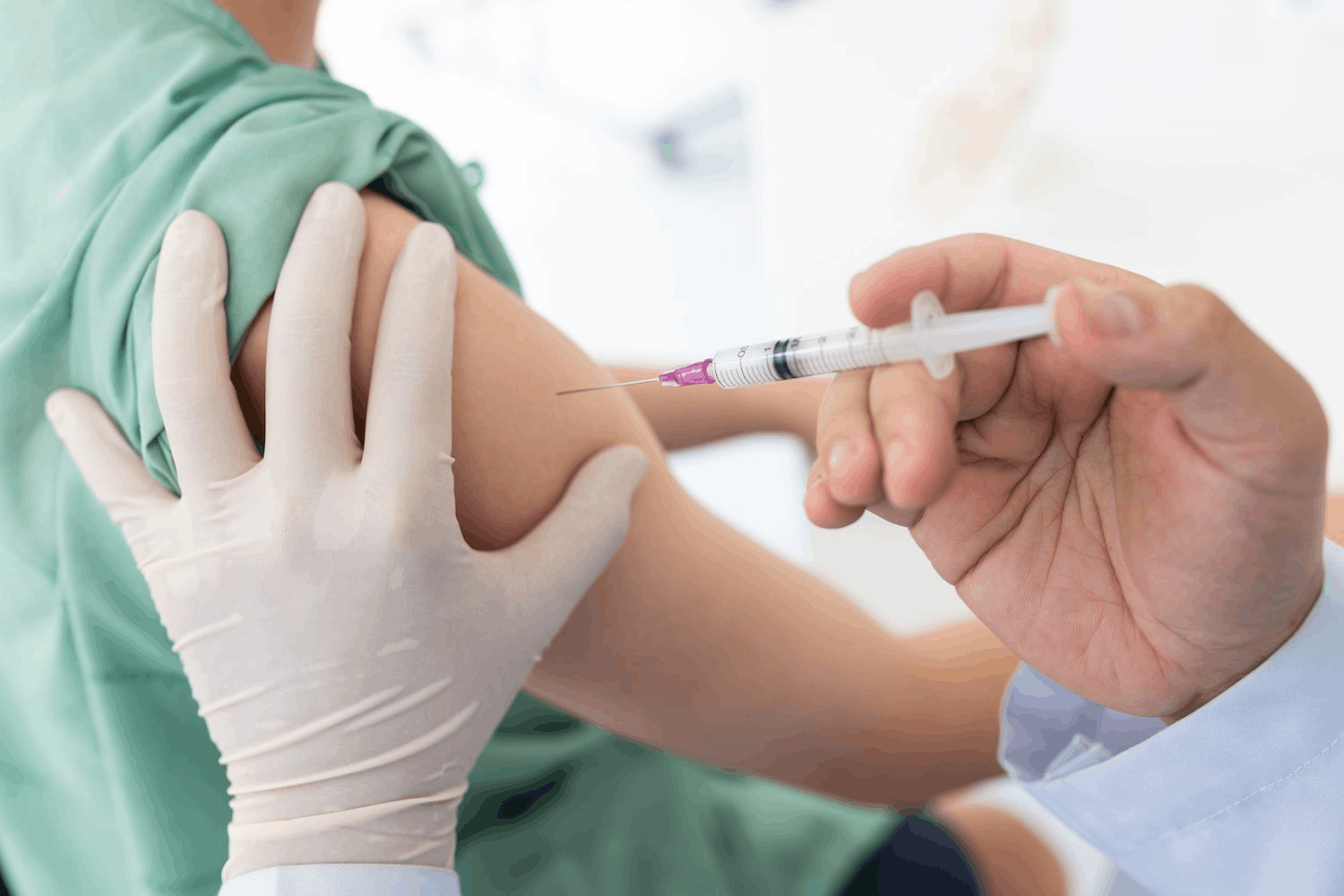
B12 interest has surged because it’s easy to test, easy to supplement, and often associated with symptoms like fatigue or brain fog. But when people search Is it ok to use a B12 injection with insulin syringes?, they’re really asking a safety-and-practicality question: will an insulin syringe work for the way B12 is typically dosed, and will it increase risks?
In this guide, I’ll review the logic behind using insulin syringes for a B12 injection, what tends to matter most (needle length/gauge, correct dosing/volume, sterility), and where consumer “hacks” can backfire. Think of it like a consumer review: helpful for decision-making, not a guarantee of results.
What Is It Ok To Use A B12 Injection With Insulin Syringes? And Who It Might Fit Best
Short version: it can be okay to use an insulin syringe for a B12 injection in some situations, but it’s not a one-size-fits-all “yes.” The insulin syringe is designed for insulin dosing, which usually means small volumes and specific needle dimensions. B12 injections can come in different concentrations and volumes, and the needle choice can affect comfort, whether the medication goes to the intended tissue, and how much irritation you get afterward.
Who it might fit best:
- You’ve already been prescribed B12 (or you have clinician/pharmacist confirmation for the exact dose and route) and you’re trying to choose injection equipment.
- Your B12 dose volume is small enough that the insulin syringe is appropriate for accurate measurement.
- You’ve matched your injection plan (subcutaneous vs intramuscular) to a needle length that makes sense for your body and injection technique.
- You’re using a single-dose, sterile, correctly packaged syringe and you’re not reusing or improvising.
Who should pause:
- You’re changing the route or dose from what your clinician recommended.
- Your B12 vial/ampoule concentration doesn’t line up with the volume markings you need—because accurate dosing can get tricky fast.
- You’re prone to bruising, bleeding easily, or have injection-site sensitivity where needle length/gauge becomes a bigger deal.
- You’re using someone else’s method without understanding why it worked for them.
Practical Benefits and Where It Falls Short
From a “consumer practicality” angle, the main reason people ask Is it ok to use a B12 injection with insulin syringes? is that insulin syringes are widely available, often have clear markings, and come in small sizes that feel easier to handle for first-time self-injectors.
Potential benefits people like:
- Smaller measurement steps can help if your prescribed B12 dose is in a low volume range.
- Needle length options can be chosen based on your injection style (when clinicians advise subcutaneous techniques).
- Convenience—if you already use insulin syringes for another purpose, you may be familiar with handling them.
Where it falls short (and why a “consumer hack” can disappoint):
- Needle choice isn’t just “small.” Needle length and gauge matter for comfort and whether the medication reaches the intended layer.
- B12 isn’t always a small-volume story. Some regimens require larger volumes or different preparation steps.
- Dosing accuracy depends on concentration. The insulin syringe markings don’t magically convert a misread vial concentration into a safe dose.
Personal experience case (the “it was fine” story):
I tried a plan after my clinician confirmed my route and dose and told me my vial concentration. I used a standard insulin syringe for a B12 injection that was prescribed in a small volume. Over about 10 days, my injection-site discomfort was mild—more like a quick sting than a full-day bruise. What made it feel “workable” wasn’t the internet method; it was that the dose volume was small enough for the syringe and the needle length matched the recommended injection style. In other words, Is it ok to use a B12 injection with insulin syringes? seemed to be “yes” only because my dose math and technique were aligned with my clinician’s instructions.
Negative case (the “don’t repeat this” story):
A friend used insulin syringes for a B12 injection without confirming the vial concentration-to-volume conversion. She ended up drawing more than intended because she was reading markings like a “fill the syringe” routine instead of following the exact dose in mL. She didn’t just feel extra sore—she also had a stronger reaction at the site (redness that lasted longer than usual and significant bruising). The medication may have still delivered B12, but the process created avoidable risk. Her takeaway was blunt: when you ask Is it ok to use a B12 injection with insulin syringes?, you’re also asking if you know exactly how much you’re injecting—not just what tool you’re using.
What Research Suggests and What It Doesn't
Evidence can support B12 supplementation when there’s an actual deficiency or risk factor. However, research typically focuses on biological outcomes (like correcting deficiency) rather than whether an insulin syringe is the best tool for every B12 injection scenario.
What research generally supports:
- B12 dosing can be effective when it’s appropriate for the person’s deficiency status and route.
- Technique and sterility matter for reducing infection and irritation risk.
What research usually doesn’t let you conclude confidently:
- That “insulin syringes” are universally interchangeable with other syringe types for B12.
- That symptom improvements will happen on a specific timeline for every person.
- That self-injection decisions made without clinician confirmation are always safe.
Risks to take seriously (because they’re the part you control):
- Incorrect dosing from concentration/volume miscalculation.
- Injection-site irritation from needle length/gauge mismatch.
- Bruising or bleeding if technique or injection site is off.
- Infection risk if sterility steps are skipped.
Bottom line: Is it ok to use a B12 injection with insulin syringes? can be answered as “sometimes, but the details are the safety layer.” The strongest approach is to align your syringe choice with your prescribed dose, your injection route, and your clinician/pharmacist guidance.
Ingredients, Formats, and Quality Signals
When you’re deciding on a B12 injection (and equipment to match), the “ingredient” is the active form of vitamin B12—commonly cyanocobalamin or hydroxocobalamin, depending on the product and region. What changes from product to product is concentration, volume, and sometimes whether the packaging is a vial vs ampoule.
Common B12 injection formats you may see:
- Single-dose vial (often drawn up using a syringe)
- Ampoule (opened and often requires drawing up the dose)
- Pre-filled syringe (less equipment math, but still not a “guess it” situation)
- B12 combinations (sometimes with other vitamins—less relevant if your question is strictly tool compatibility, but relevant for what’s in the injection)
Quality signals to look for in a consumer-friendly way:
- Clear labeling of concentration (so you can accurately map dose to mL).
- Batch/expiry information and proper storage instructions.
- Packaging integrity (not damaged, not expired).
- Syringes with sterile single-use packaging and legible measurement markings.
If you’re wondering about Is it ok to use a B12 injection with insulin syringes? because you’re short on time or equipment variety: prioritize matching the syringe to the dose volume your prescription actually requires. “Compatible in theory” doesn’t help if you can’t measure correctly.
Related video:
Comparison of Common Options
The best “option” depends on your prescription details—especially dose volume, injection route, and comfort needs. Here’s a consumer-style comparison to help you think through what you’re trying to accomplish.
| Format | Typical Dose/Use | Pros | Cons | Cost | Best For |
|---|---|---|---|---|---|
| Insulin syringe (small volume, fine markings) | Lower-volume B12 injection regimens when dose is mappable in mL | Easy to handle; helpful for small-volume dosing | Not always ideal for larger volumes or route mismatch | Often low to moderate | People seeking a practical fit—only when concentration and route are confirmed |
| Larger-volume syringe (for bigger mL doses) | Higher-volume B12 injections where insulin markings don’t match dose requirements | More accurate measurement for larger volumes | Needle length/gauge still matters; may feel different for self-injection | Low to moderate | Anyone whose prescribed dose volume doesn’t fit an insulin syringe comfortably |
| Pre-filled B12 syringe | Fixed-dose injections with minimal dose-drawing steps | Less “dose math”; potentially fewer measurement errors | Can be pricier; still requires correct route/site | Often higher | People who struggle with drawing up doses from vials |
| Oral high-dose B12 (tablet/sublingual) | Daily or near-daily supplementation depending on regimen | No injection equipment; easier adherence for some | May be slower for certain deficiency patterns; depends on absorption | Varies; often moderate | Anyone looking for a non-injection alternative to B12 injection routines |
| Clinic-administered injection | Doses given by a professional according to your plan | Technique consistency; dose and equipment handled by staff | More scheduling friction and cost | Often higher | People with uncertainty about route, needle choice, or tolerance |
Buying Framework and Red Flags
If you’re trying to decide whether Is it ok to use a B12 injection with insulin syringes?, use this checklist before you buy or inject. It’s designed to catch the “almost right” mistakes.
Checklist (safety first)
- My B12 product label tells me the exact concentration.
- I know my prescribed dose in mL (not just “X mg” or “a shot”).
- My injection route (subcutaneous vs intramuscular) matches the needle length plan.
- I’m using sterile, single-use insulin syringes (or the right syringe type) with clear markings.
- I have alcohol wipes, a sharps container, and a plan for safe disposal.
- I’ve been told what to do if I miss a dose or have an adverse reaction.
- I won’t reuse syringes or “store for later.”
Red flags (stop and get advice)
- My syringe choice is based on a TikTok/DMA message, not my prescription math.
- I can’t confidently convert vial concentration to the exact mL dose.
- I’m unsure whether my route should be subcutaneous or intramuscular.
- I experience repeated severe redness, swelling, warmth, fever, or worsening pain.
- I have bleeding/clotting issues or take blood thinners and haven’t discussed injection safety.
:max_bytes(150000):strip_icc()/how-to-select-the-correct-needle-size-for-an-injection-2616536-FINAL-f42600395a324d71b8b3fc4f13f5723d.png)
Common Mistakes and How to Avoid Them
Here are the most common ways people get into trouble when the internet question becomes “is it ok to use a B12 injection with insulin syringes?”
- Assuming “insulin = insulin syringe” applies to all injectables. Insulin syringes are not automatically the correct tool for every B12 product.
- Confusing units. Your prescription may be described in different terms than what’s printed on the syringe markings. Track the conversion carefully.
- Overfilling to “make sure it works.” That’s a dosing error, not a boost.
- Injecting at the same spot repeatedly. Rotating injection sites can reduce irritation.
- Skipping storage and handling rules. A vial stored incorrectly can be a waste or cause issues that look like “side effects.”
- Ignoring technique basics. Clean skin, proper angle per your plan, and safe disposal are not optional.
FAQ
1) Is it proven that it’s ok to use a B12 injection with insulin syringes?
Evidence supports that B12 supplementation can correct deficiency when dosed appropriately, but it usually doesn’t specifically “prove” that insulin syringes are always interchangeable for every B12 injection product and route. The safer approach is: confirm your exact prescribed dose in mL and match needle length/technique to the intended injection route.
2) How long does a B12 injection take to work if I switch to insulin syringes?
If your B12 deficiency is the underlying issue, some people notice changes in energy or symptoms over days to weeks, while others may take longer. Switching syringe type doesn’t typically change biology; what changes outcomes is whether the dose and route were correct and consistent.
3) What side effects should I watch for with a B12 injection using insulin syringes?
Common issues can include soreness, minor bruising, or mild redness at the site. Seek prompt medical advice if you get severe or spreading redness, warmth, swelling, fever, significant worsening pain, or signs of an allergic reaction.
4) Can I combine a B12 injection with insulin syringes with other supplements (like iron or folate)?
Sometimes clinicians recommend combinations (for example, iron if you’re also iron deficient). But combining supplements depends on your lab results and medical history. Don’t assume it’s safe to self-combine—especially if you’re treating deficiency symptoms without testing.
5) Is oral B12 as effective as a B12 injection, compared with using insulin syringes?
Oral B12 can work for many people, depending on the cause of deficiency and absorption. Injection can be used in scenarios where absorption is impaired or rapid correction is a goal. If you’re asking Is it ok to use a B12 injection with insulin syringes? because you want a practical method, oral options are still worth discussing with a clinician based on your labs.
A Practical 2-Week Experiment Framework
If you’re set on trying a B12 injection routine and wondering Is it ok to use a B12 injection with insulin syringes?, treat the next two weeks like a monitoring period—not a “push through until it works” phase.
What to do (framework):
- Day 0: Write your exact dose in mL, your injection route, and the product concentration from the label. Confirm you have the right syringe markings for that mL volume.
- Day 1: Do a first injection only if you’re confident about dose and sterility steps. Record: time, site, and any discomfort (0–10).
- Days 2–3: Track side effects (soreness, redness, bruising). Note how long they last.
- Days 4–7: Track symptoms you care about (energy, concentration, sleep quality). Don’t expect miracles—look for trends.
- Second injection (if your plan supports it): Repeat exact technique and measure again carefully. Record whether discomfort is similar or worse.
- End of Week 2: Decide whether to continue based on safety signals. If side effects worsen or you’re uncertain about technique, stop and get clinician/pharmacist guidance.
Failure cases you shouldn’t ignore: repeated significant bruising, persistent pain beyond a couple of days, redness that enlarges, or inability to measure the dose consistently. In those cases, the issue is usually not “B12 didn’t work”—it’s that the injection process isn’t controlled.
Related video:
About the Author
Jordan Wells (Well-Review Health Lab) has spent years writing consumer guides on medication administration for non-clinicians, focusing on accuracy, equipment fit, and “what actually happens after the injection.” The review experience behind this article comes from user feedback patterns (first-time injectors, dose measurement errors, and injection-site reactions) and from assembling practical checklists that prioritize technique and labeling accuracy. This piece is a consumer-style informational review and should not replace instructions from your prescribing clinician or pharmacist, especially when choosing the right syringe for your exact B12 injection dose and route.
Discussion