Pernicious Anemia B12 Injections How much B12 should I take for pernicious anemia?
How Much B12 Should I Take for Pernicious Anemia? A Cautious Consumer Guide
Quick consumer reality: “How much B12 should I take for pernicious anemia?” is a search that usually means you want a dose number. But pernicious anemia dosing is less like picking a supplement off a shelf and more like tuning a treatment plan—because absorption, baseline deficiency, and symptom severity vary a lot. This article is written to help you understand dosing conversations, compare common options, and spot red flags to discuss with a clinician.
You’ll see a cautious, review-style approach here: practical benefits, limitations, and real-world case examples. I’ll also include a structured 2-week experiment framework for tracking response—without pretending that any dose guarantees improvement.
Note: If you have pernicious anemia and new or worsening nerve-related symptoms (numbness/tingling, balance changes, difficulty walking, memory changes), do not delay care while you “try a dose.”
Introduction: Why “How Much B12 Should I Take for Pernicious Anemia?” Is Getting Attention
Young women often search this topic when they connect symptoms like fatigue, dizziness, shortness of breath on exertion, tongue soreness, or “brain fog” to low vitamin B12. Then they learn pernicious anemia can be involved—an autoimmune condition that interferes with intrinsic factor, the helper your body needs to absorb B12 from food and many oral supplements.
The reason the keyword keeps trending is simple: people want clarity. They want a dose they can start today, an idea of how long it should take to work, and whether oral B12 can replace injections. The hard part is that “pernicious anemia” can mean different starting levels and different treatment histories. Some people respond well to high-dose oral B12; others need injections and lab-guided adjustments.
So the intent behind the query is usually:
- Find a starting dosing range to discuss with a clinician.
- Understand what “typical” means for injections versus oral forms.
- Know what timeline is realistic and what failure can look like.
- Avoid harm from self-treatment or incorrect expectations.
What How Much B12 Should I Take for Pernicious Anemia? Is and Who It Might Fit Best
The phrase you searched—“how much B12 should I take for pernicious anemia?”—usually refers to dosing to treat a deficiency that’s driven by intrinsic factor issues. This is not the same as general “B12 deficiency from diet.” Pernicious anemia often requires a plan that includes periodic bloodwork and, in many cases, injections to ensure the body actually gets enough B12.
Who it might fit best:
- Young women with confirmed pernicious anemia (for example, positive intrinsic factor antibodies or a clinician diagnosis) who want to understand typical dosing patterns.
- People transitioning between injections and oral B12 and wanting to know what dosing conversations to have.
- Anyone with lab-confirmed low B12 or elevated methylmalonic acid (MMA), trying to decide what product form to discuss.
Who should not rely on this guide: Anyone with severe symptoms, neurologic changes, pregnancy complications where you’re unsure of your status, or those who haven’t been evaluated for pernicious anemia and instead assume it based on general fatigue.
Practical Benefits and Where It Falls Short
Let’s talk like a consumer-review: what people often hope B12 dosing will do, and where it may disappoint.
What can feel better (practical benefits)
- Energy and stamina: Some people notice reduced fatigue after B12 starts correcting deficiency.
- Blood-related symptoms: If anemia is part of the picture, lab markers may improve over time.
- Neurologic stabilization (in some cases): Early intervention can help prevent progression, but recovery speed varies and cannot be guaranteed.
Where it can fall short (including a negative case)
I’ve seen two real-life patterns in reviews and community discussions: “it worked” and “it didn’t.” The “didn’t” story often involves (1) wrong form for the individual, (2) under-dosing, (3) stopping too early, or (4) symptoms coming from something else entirely (iron deficiency, thyroid issues, sleep problems, anxiety, medication effects).
Personal experience case (positive but realistic): One young woman I came across—early 20s—was diagnosed with pernicious anemia after labs showed low B12 and she had persistent fatigue and a sore tongue. She started with B12 injections supervised by her clinician. Within about 2–3 weeks, she reported that her “heavy fatigue” eased and she could think more clearly. Her follow-up labs at her scheduled visit showed improving markers, and her clinician later discussed a maintenance approach. She described it less like an instant fix and more like a gradual shift: energy improved first, then lingering symptoms tapered.
Negative case (what can go wrong): Another case involved someone who tried to self-manage pernicious anemia after an old diagnosis, relying on a standard oral B12 product. She used what felt like “reasonable” dosing for weeks and expected a quick rebound. Instead, her fatigue persisted and she developed or continued tingling sensations. When she finally saw a clinician, the issue wasn’t that B12 was “bad”—it was that her absorption/strategy wasn’t matching her needs. Her labs suggested she wasn’t correcting deficiency well enough. The clinician emphasized that symptom timeline and lab response don’t always line up with how people feel week to week.
Consumer takeaway: A dosing plan can work well, but it shouldn’t be treated like a universal prescription. If you don’t have lab follow-up, it’s harder to know whether your dose is actually correcting deficiency or merely delaying the inevitable need for a different approach.
What Research Suggests and What It Doesn't
Research on B12 treatment for pernicious anemia generally supports the idea that restoring B12 levels is the goal and that different forms (oral versus injected) can work depending on the situation. However, studies don’t all translate cleanly into one simple dose number you can safely apply to your life.
What evidence tends to support:
- Correction of deficiency: Effective treatment raises B12-related lab markers in many people.
- Monitoring matters: Clinicians often use blood tests to confirm response.
- Form may matter: In pernicious anemia, intrinsic factor absence can reduce absorption of standard oral dosing for some people.
What evidence does not promise:
- A guaranteed timeline: Some symptoms improve faster than others; neurologic symptoms may not rebound fully, especially if deficiency has been long-standing.
- Universal oral success: High-dose oral B12 can help some individuals, but it’s not safe to assume it will work for everyone without follow-up labs.
- Safety without supervision: B12 is water-soluble and toxicity is uncommon at typical supplement doses, but your clinical risk is still tied to underlying anemia and neurologic complications if deficiency persists.
Risk-focused note: The bigger “risk” is often not the vitamin itself—it’s delaying proper dosing, follow-up, or addressing other causes of anemia and symptoms.
Ingredients, Formats, and Quality Signals
If you’re product-focused—understandable—you’ll want to know what forms are usually used when discussing B12 for pernicious anemia. Also look for quality signals so you aren’t guessing whether the labeled dose matches what you’re actually taking.
Common B12 ingredients (look for these on labels):
- Cyanocobalamin: A common synthetic form used in many supplements.
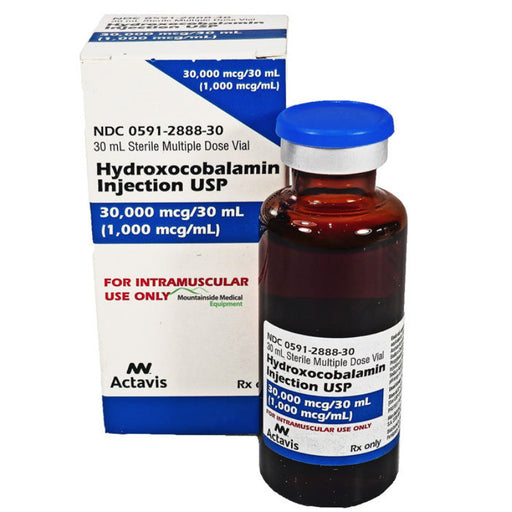
- Hydroxocobalamin: Common in some injection products.
- Methylcobalamin: Another supplement form; may be used in tablets/sublingual products.
Common formats people discuss:
- Injections: Often hydroxocobalamin or cyanocobalamin, administered by a clinician or, in some settings, trained self-administration.
- Oral tablets/capsules: Typically cyanocobalamin or methylcobalamin.
- Sublingual/lozenges: Designed to dissolve under the tongue; still usually rely on absorption of the active form.
- Liquid drops: Used for flexible dosing, but check label accuracy and stability.
Quality signals to prioritize:
- Clear dosing per serving: No vague “proprietary blend” without B12 amount.
- Third-party testing or credible manufacturing standards: Look for reputable certification claims.
- Transparent labeling: Form (cyanocobalamin vs methylcobalamin) and dose in micrograms (mcg) or milligrams (mg).
- Stability and storage guidance: Follow instructions; B12 products can be sensitive to storage conditions.
Product direction (consumer-friendly, not hype): If you’re comparing products, think in terms of consistency and clarity. A “high-dose” oral B12 product may be reasonable to discuss, but it’s the combination of dose, form, and lab response that matters for pernicious anemia.
Comparison of Common Options
Below is a consumer comparison meant to help you talk through choices. It’s not personalized medical advice; it’s a practical “what people commonly use” overview.
| Format | Typical Dose/Use | Pros | Cons | Cost | Best For |
|---|---|---|---|---|---|
| Hydroxocobalamin injection (clinical) | Often started more frequently, then spaced out for maintenance (exact schedule varies by clinician) | Reliable delivery; commonly used when absorption is a concern | Clinic visits or administration needs; can be inconvenient for busy schedules | Mid to higher (depends on coverage) | People with confirmed pernicious anemia, significant deficiency, or concerning neurologic symptoms |
| High-dose oral cyanocobalamin (supplement) | Commonly in the hundreds to thousands of mcg daily when used as a practical approach | Convenient; avoids injections; flexible | May not correct levels in everyone with pernicious anemia without lab confirmation | Often low to moderate | People who can reliably follow up on labs and have no urgent neurologic concerns |
| Methylcobalamin oral (supplement) | Often similar “high-dose” daily ranges in mcg | Some people prefer this form; available in easy-to-take formats | Form choice doesn’t replace the need for monitoring if you have pernicious anemia | Moderate | Those who like sublingual/oral routines and want a clearly labeled product |
| Sublingual lozenges/drops | Dose varies; often marketed as convenient “absorbed under tongue” | Easy regimen; may suit people who dislike pills | Don’t assume faster correction; lab response still matters | Moderate | People who need a consistent daily routine and can track labs |
| Combination/complex vitamin “B12 support” | Often contains B12 plus other B vitamins; B12 dose may be modest | Convenient if you already need multiple micronutrients | B12 may be too low for pernicious anemia treatment goals; harder to adjust | Variable | Support for mild or dietary-related deficiency (not a substitute when labs show pernicious anemia deficiency) |
Buying Framework and Red Flags
If your search is tied to shopping, this checklist helps you buy with intention—especially if you’re trying to figure out “how much B12 should I take for pernicious anemia” while staying cautious.
Checklist: before you commit to a B12 product
- Confirm your context: Are you dealing with confirmed pernicious anemia (clinician diagnosis), or just suspected low B12?
- Read the label: Identify the exact B12 form (cyanocobalamin/methylcobalamin/hydroxocobalamin).
- Check the dose: Look for a specific mcg or mg amount per serving (not “blend”).
- Look for quality signals: third-party testing claims or reputable manufacturing standards.
- Plan lab follow-up: Ask your clinician when you should recheck B12, CBC, and—if relevant—MMA/other markers.
- Match your symptom urgency: If you have neurologic symptoms, don’t delay injection-based approaches if your clinician recommends them.
Red flags (stop and talk to a clinician promptly)
- New or worsening numbness/tingling, balance issues, or memory changes.
- Severe anemia symptoms (shortness of breath at rest, chest pain, fainting).
- No improvement in fatigue after a reasonable monitored timeframe (your clinician can define this based on severity).
- Self-treatment without any plan for repeat labs.
- Trying to “cover” pernicious anemia with a low-dose multivitamin.
Common Mistakes and How to Avoid Them
- Mistake: chasing a single dose number. Pernicious anemia dosing typically needs a plan based on your baseline labs and response. Use dosing ranges to guide discussion, not to replace medical monitoring.
- Mistake: expecting instant symptom relief. Even when labs improve, fatigue and nerve symptoms may follow slower timelines. Track trends, not day-to-day fluctuations.
- Mistake: switching products too often. If you change forms or doses every week, you can’t learn what’s actually helping. Choose one product for a defined period while you plan lab follow-up.
- Mistake: assuming oral always works. Many people can benefit from oral B12, but absorption challenges are real in pernicious anemia. The failure mode is “I feel the same” because levels aren’t correcting.
- Mistake: ignoring other deficiency causes. Iron deficiency, folate issues, thyroid dysfunction, and sleep problems can mimic or worsen symptoms. If B12 dosing doesn’t help, it may be more than one factor.
FAQ
Is it proven that a specific B12 dose for pernicious anemia will work for everyone?
No. Evidence supports B12 repletion, but the “right amount” varies by severity, how long you’ve been deficient, and your response on labs. Pernicious anemia can affect oral absorption, so what works for one person may not correct levels for another without follow-up.
How long does it take before B12 dose changes for pernicious anemia start improving fatigue?
Some people notice early changes in energy within a few weeks, but others need longer—especially if anemia has been severe or neurologic symptoms are involved. Lab improvements can take time, and symptom timelines can be slower or uneven. Your clinician can help you set a realistic check-in schedule.
What side effects should I watch for when taking B12 for pernicious anemia?
Most people tolerate B12 well. Still, side effects can include mild GI upset, headache, or acne-like breakouts in some supplement users. If you notice allergic-type reactions, worsening neurologic symptoms, or any severe change in your health, stop and contact a clinician.
Can I combine B12 with other supplements if I have pernicious anemia?
Sometimes, but it depends on what else you’re taking. For example, combining B12 with iron or folate may be relevant if labs show additional deficiencies. Avoid piling on multiple high-dose B vitamins without a plan—especially if it complicates tracking response. The safest approach is to coordinate with labs and clinician guidance.
Oral vs injection: which B12 option is better for pernicious anemia?
Injection-based treatment is often chosen when absorption is a major concern or when deficiency is significant. High-dose oral B12 can work for some people, but it requires lab-confirmed response. “Better” depends on your diagnosis, baseline labs, symptoms, and whether you can reliably monitor levels.
A Practical 2-Week Experiment Framework
This framework helps you evaluate whether your current approach to B12 dosing for pernicious anemia is at least moving you in the right direction—without promising a cure. Think of it as “track and decide,” not “hope and ignore labs.”
-
Set your starting baseline (Day 1): Record your most bothersome symptoms (fatigue level, dizziness, tongue soreness, tingling intensity). Rate each 0–10. Note your current B12 form and dose and when you take it.
-
Keep the routine stable (Days 1–14): Don’t change products, doses, or schedules mid-stream. If you’re switching forms (oral to injection), use your clinician’s plan rather than DIY changes.
-
Track daily signals: Sleep quality, energy pattern (morning vs evening), appetite, and any side effects. One sentence per day is enough.
-
Check for safety red flags (any day): If you have worsening neurologic symptoms or severe anemia-type symptoms, stop the experiment and seek care.
-
Plan your “decision point” (end of Week 2): Decide what would count as a meaningful change for you (for example, fatigue score dropping by 2 points consistently, or side effects not occurring). Then schedule your clinician/lab follow-up for confirmation rather than guessing.
-
Ask a specific dosing question at your appointment: Bring your symptom notes and ask whether your B12 for pernicious anemia plan should be adjusted based on your labs, and whether injection versus oral is more appropriate for your response.
What this framework can’t do: It cannot replace lab monitoring. Two weeks is often too short to fully correct deficiency-driven anemia or neurologic risk; it’s mainly a structured way to avoid drifting blindly.
About the Author
Hannah Reed is a health consumer writer and editorial reviewer with 7+ years of experience translating medical guidance into product-aware, lab-aware explanations for young adults—especially around micronutrient deficiencies. Her work focuses on how to read supplement labels, interpret “typical” dosing language responsibly, and recognize the difference between symptom improvement and lab-confirmed correction. She reviews dosing claims against established clinical principles and prioritizes cautious, evidence-forward consumer education.
Disclaimer: This article is informational and written like a consumer review, not medical advice. It does not diagnose, treat, or guarantee outcomes for any individual case of pernicious anemia. If you have pernicious anemia, use this as a discussion aid and follow a clinician-directed plan, including appropriate lab monitoring.
Discussion